
Cytokinin Paste Application Guide
Cytokinin paste is a targeted plant growth regulator used to activate dormant buds and stimulate new shoots where you need them. It is especially popular among orchid (Phalaenopsis) growers, but it can also be used on many ornamental plants such as succulents, hibiscus, African violets, roses, camellias, citrus, begonias, and more. Results depend on plant health, season, and aftercare.
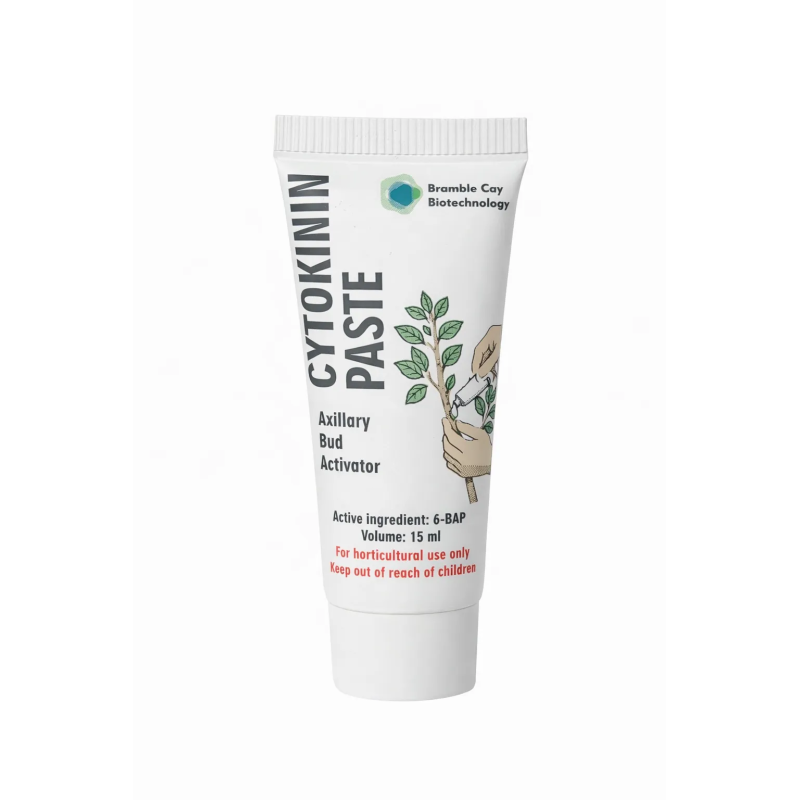
What you can expect
- Wakes up dormant buds and triggers new shoots
- Helps increase branching (more growth points)
- Works best right before the active growth period (for orchids: late winter → spring)

Materials & Equipment
Cytokinin paste |
Sterile blade / needle |
Toothpick for dosing |
Gloves & disinfectant |
Safety & hygiene
- Work with clean tools; disinfect blade/needle before each plant.
- Wear gloves; avoid touching eyes and skin; keep away from children & pets.
- Apply only to healthy plants. Do not treat stressed or sick plants.
Choose the right plant & target point
Pick a healthy plant with active roots. Select a dormant bud (node) you want to activate. For orchids, choose a bud on a spike (often top or bottom buds respond well, depending on the plant).
Disinfect tools
Disinfect your blade/needle and work area. This reduces infection risk when exposing bud tissue.
Expose the dormant bud
Carefully remove the dry protective scale covering the bud. Work slowly to avoid damaging the spike/stem and the bud itself.

Light activation + apply the paste
With a sterile needle or blade, make a very shallow scratch on the exposed bud surface. Then apply a small dot of paste. Typical dot size: 1.5–2.5 mm (about a small pea).

Spread evenly & keep it minimal
Spread the paste in a thin, even layer over the bud surface. More is not better. For most plants, treat no more than 1–3 points per plant in one session.
- Smaller dose → more controlled growth
- Overdosing can cause weak/deformed growth or too many shoots
Wait & observe (7–10 days)
Under good conditions, the bud often starts to activate in 7–10 days. Some species may take longer. Keep stable warmth and bright indirect light.


Aftercare (critical for success)
New growth needs extra resources. Provide warmth, stable light, and careful feeding. If conditions are “winter-like” (cold, low light), the plant may weaken while trying to push new shoots.
Feeding direction (simple rule of thumb)
- For vegetative growth / keikis: moderate nitrogen support
- For flowering direction: emphasize phosphorus + potassium (without overfeeding)
Two common application scenarios
Scenario A — Wake an existing dormant bud
Expose the bud, lightly scratch the surface, apply a 1.5–2.5 mm dot, spread evenly, then provide proper aftercare.
Scenario B — Initiate a new bud on a stem
Make a few shallow scratches on the stem where you want new growth, apply a small amount of paste, spread gently. First signs can appear within 1–2 weeks (species-dependent).
IMPORTANT
- Do not apply to young/small plants.
- Do not apply to fresh growth tips (active shoot tops with leaves).
- Do not apply to roots.
- Avoid treating many points at once (guideline: max 3).
Example results (what it can look like)


Storage
- Store tightly closed, away from light and heat sources.
- Recommended: cool, dark place (often a refrigerator).
- Before use, let it warm slightly to room temperature so it spreads easier.
Thank you for choosing Bramble Cay products.
This guide was prepared to help you get consistent, clean results. If you have questions, our support team is here to help.
Join our Telegram community: t.me/tissue_culture_club_chat